Academic Research
Caring Wildly: Relational Rehabilitation
Alongside running Nala's Nook, I'm undertaking a PhD in anthrozoology (human-animal relationships). The project explores caring relationships and roles with permanently captive wild animals and why they matter in their rehabilitation, recovery, wellbeing and quality of life.

The Caring Wildly research is funded by the Open University
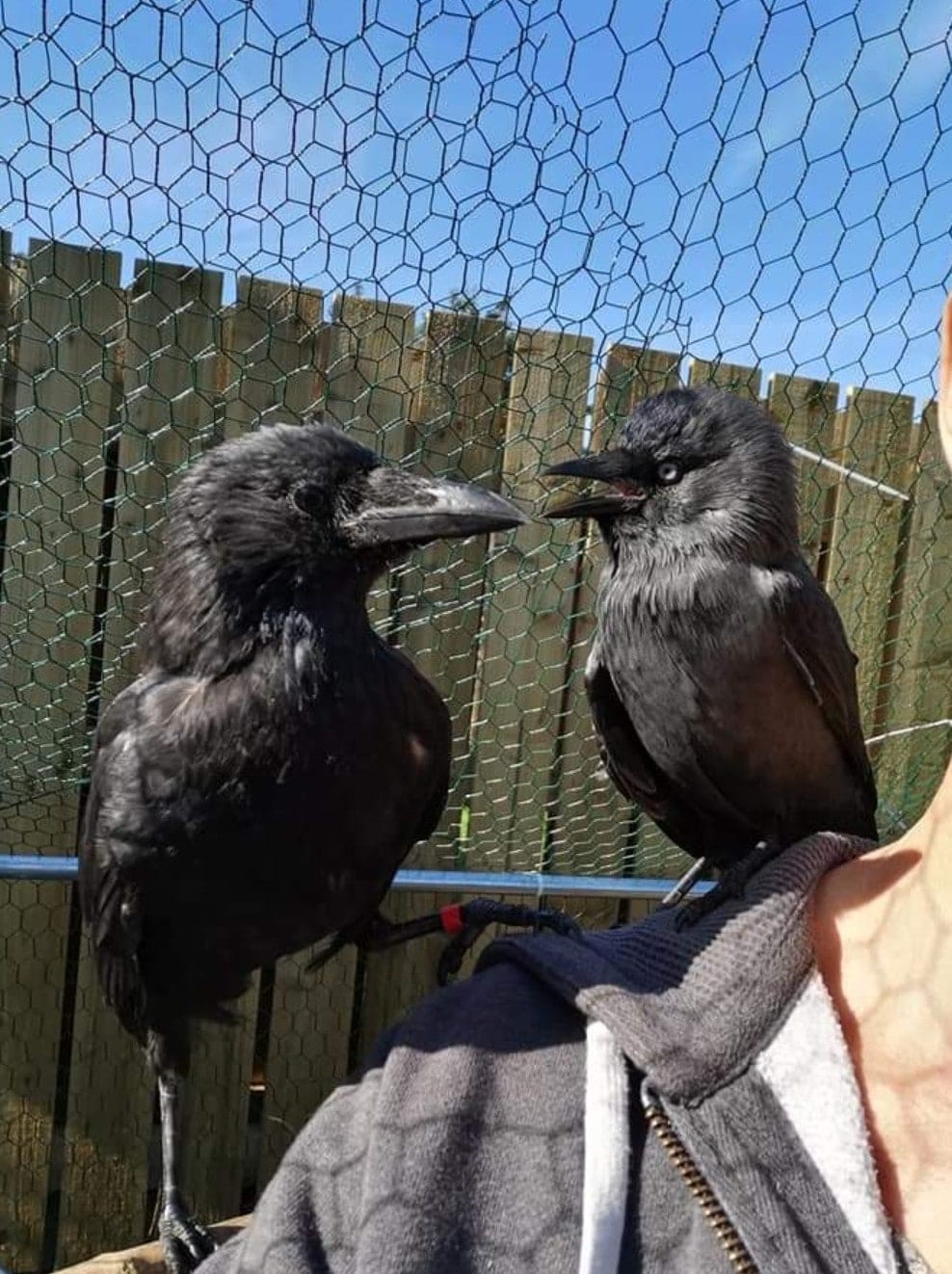
Relational Rehabilitation brings together all of those relationships that are in service of the care of these animals, between the carer and the animals themselves and between the different human stakeholders involved in their care, in order to understand them, learn from them and improve them. By doing so, relationships can become explicit influences in the wellbeing of the animals rather than incidental and unexamined.
For example, within the formal roles of "keeper" and "rehabilitator" what does it mean to also be an advocate, a guardian, a surrogate mother, a physiotherapist and sometimes an animal's only kin? What part do wider relationships, with vets, peers, mentors, and fellow researchers play in an animal's care, recovery and ongoing wellbeing too? What wider cultural narratives and attitudes impact these caring relationships and, in turn, the wellbeing of the animals?
My research centres on sanctuary care specifically: animals kept for their own sake and the opportunity for life rather than euthanasia, not for entertainment or for any other human interest. I use multispecies autoethnography, which means that I analyse my own lived experience and relationships with the animals I care for at my sanctuary, Nala's Nook, and with all those fellow humans who help (and sometimes hinder) that care
A bridge between worlds
As a practitioner who has returned to academia, I want to close the gap between research and practice, in service of the animals in sanctuaries like mine. Formal guidance for rehabilitators still leans heavily toward choosing death for animals who cannot return to their original habitat, or who live with disability. My own practice shows what's possible when they're given a chance at life instead, with the right care and understanding. But changing guidance requires an evidence base, and stories like mine are usually dismissed as "anecdotal": a word that, in its original sense, means unpublished, not untrue. I chose autoethnography so I could change that, turning the evidence from my own practice into something rigorous, scrutinised, and published. It doesn't have to be agreed with. But it becomes much harder to ignore. This isn't the first time I've worked to bring research and practice together. My earlier PhD in psychology did the same, in a different field. I also belong to The Multispecies Collective, a research network built on a similar belief: that real change for animals comes from practice shaping theory and theory shaping practice together, not from one informing the other alone, and that the point of the work is change itself, not describing things as they stand.
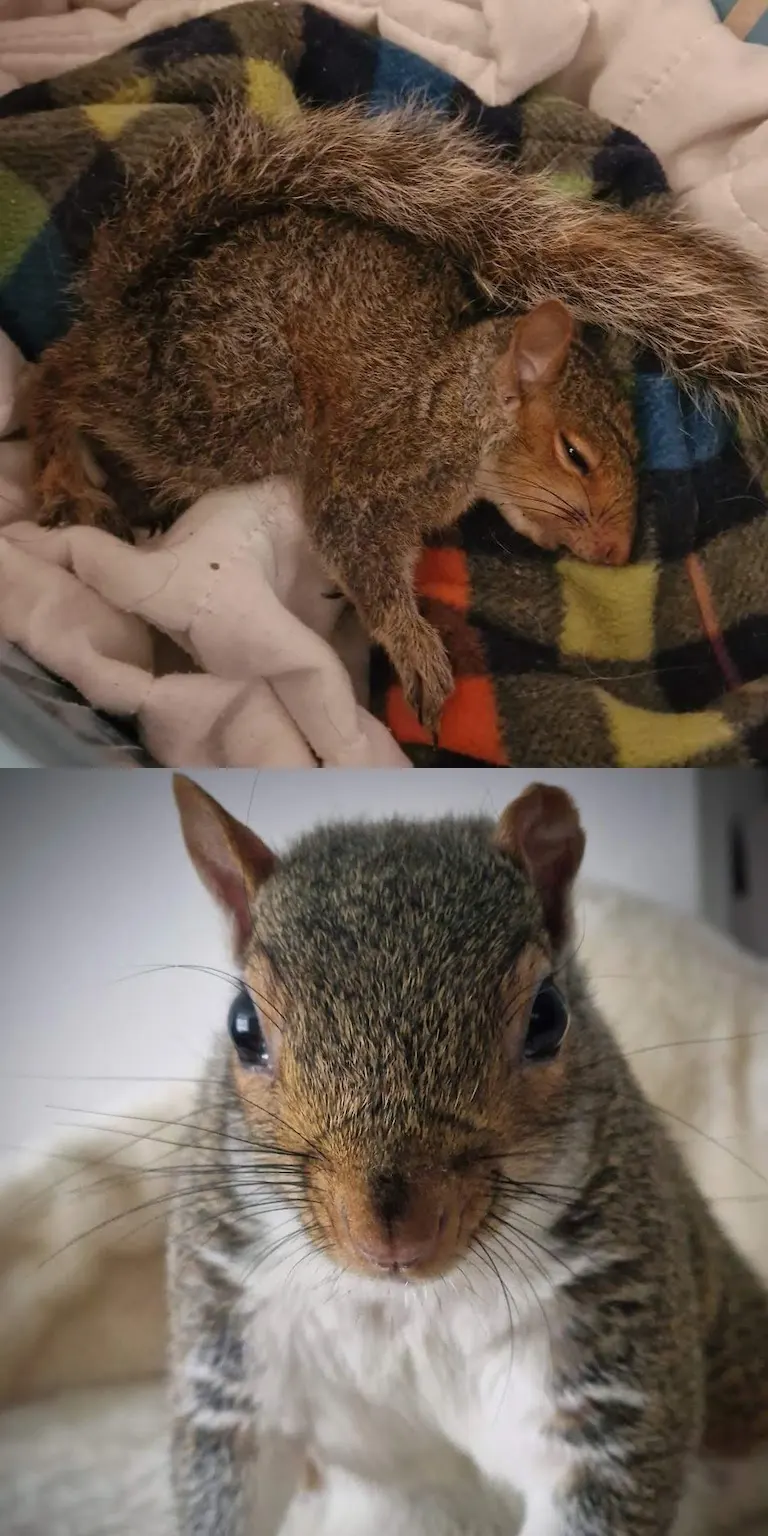
Bella's story
Bella came to me at around ten weeks old. She was in a city park, badly injured and already very weak when a passer-by picked her up and took her to a local wildlife rescue. They knew they weren't equipped to care for her, legally or in terms of expertise, so they asked me to take her in.
At the vet the next morning, the outlook was bleak: her back legs were almost certainly permanently paralysed. We discussed whether it would be kinder to have her put to sleep. But by then I already knew how resilient squirrels can be. We chose pain relief instead, and time, to see how she managed over the next few days.
That decision became the seed of my first thesis chapter. Analysing it properly meant separating out the different grounds on which "better off dead" gets argued, in wider culture and in current best-practice guidance for wild animals who can't return to the wild:
- Is she better off dead because she can't be released?
- Is she better off dead because she's a grey squirrel, a member of an "invasive, non-native" species?
- Is she better off dead because she's permanently disabled?
Bella's story, first told at a conference and later shared more widely, is what took Nala's Nook's small following to over 10,000 almost overnight. It's since been the subject of a piece for Psychology Today and an essay for Psychreg, as well as the foundation of my first thesis chapter.
The thesis
My PhD is titled Caring Wildly: Relational Rehabilitation in an English Squirrel and Corvid Sanctuary, a Multispecies Autoethnography.
In the media